


By Colette Cόrdova
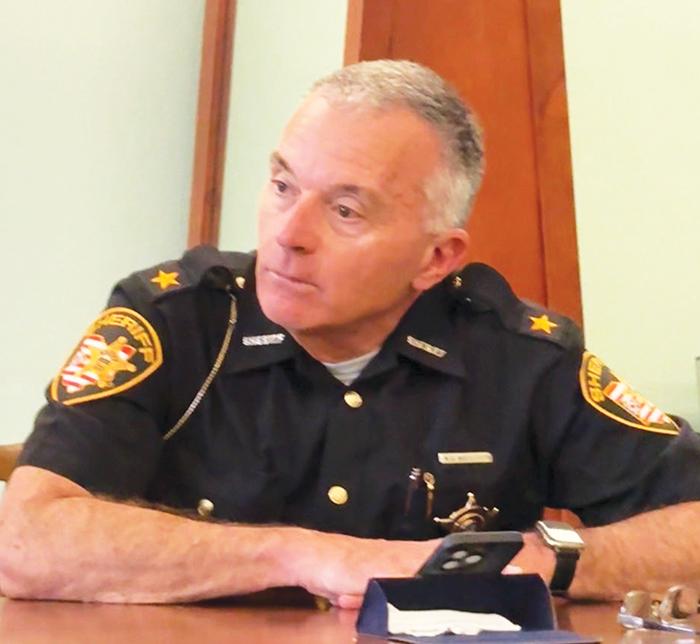
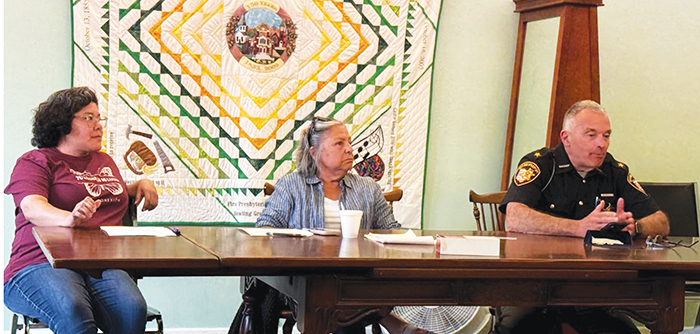
(Bowling Green, OH, May 23, 2026)- What would it take for an immigrant to feel safe in Wood County? About 25 people, including Sheriff Mark Wasylyshyn, had a peaceful, civil discussion about the experiences that the Latin Community, immigrant or not, has in Wood County. Facts about the Sheriff Department’s relationship with ICE were also spelled out.
On May 20, 2026, at 6 p.m., the First Presbyterian Church in Bowling Green, Ohio, hosted a community conversation that had 5 or so Hispanics sprinkled in to discuss immigration with Sheriff Mark Waslynshyn. Kathleen Baldoni of Perrysburg Persists organized the event with Lucia Myers, the Executive Director of La Conexión. The Sheriff gave a short bio of himself, stating he grew up in Rossford, worked for the Perrysburg Police Department for 14 years, and was elected as the Wood County Sheriff in 2004. He is now in his 21st year. The Sheriff even went on to say he was the son of an immigrant father from Ukraine, and when he grew up, they spoke Ukrainian at home. In essence, implying affinity with the issue at hand.
The Sheriff wanted everyone in the room to know that his number one job is to “preserve the peace.” If a village or city in Wood County needed assistance in keeping the peace, one of his deputies could step in. He stated that he can respond to situations that are ruled by state or local laws, but not federal, as that is out of his jurisdiction. He mentioned he runs the Wood County Jail in Bowling Green, which has received 100% on its inspections since he has been Sheriff. The Sheriff presented as affable, easy to get along with, and proud of his record.
The issue at hand is what the Sheriff Department’s relationship is with ICE, and more importantly, with immigrants. Kathleen explained the three types of 287(g) agreements that police/sheriff departments could have with ICE, which is housed at the United States Department of Homeland Security. Below are more details on types of 287(g) agreements.
- Warrant Service Office Model– Purpose: Enables local law enforcement to execute ICE Administrative warrants. Authority: Officers are trained and authorized to serve warrants on individuals already in custody. Focus: Limited to executing warrants without the authority to interrogate individuals about their immigration status.
- Jail Enforcement Model– Purpose: Allows local law enforcement to identify and process noncitizens in custody. Authority: Deputized officers can interrogate individuals about their immigration status and issue immigrant detainers. Focus: Primarily operates within jails and correctional facilities
- Task Force Model– Purpose: Allows local law enforcement to enforce immigration laws during routine police activities. Authority: Officers can question and arrest individuals suspected of violating immigration laws. Focus: Broadest form of collaboration, effectively turning local police into ICE agents.
 These 287(g) agreements can undermine community trust as it deters immigrants from contacting local police to report crimes or seek help in an emergency, thus harming public safety.
The audience was happy to hear that Wood County currently has no 287(g) agreements with ICE. The Sheriff also stated that ICE had not called the Sheriff at any time to check on anyone’s immigration status. Someone asked if his deputies were to stop someone for an infraction, while driving without a license, how would they handle it? The Sheriff stated, “If the driver has no ID and doesn’t speak English, we need to know who they are to issue a citation, so we bring them to the jail, fingerprint them to find out who they are. Fingerprinting can take 1-2 days for results so they are held in jail until they can go to a court for a judge to decide what happens to them.” He also stated that they contact ICE to see if they have any interest in the person. They will put a “hold” on the immigrant only if they get an order from a judge. They do not honor a “detainer” if requested from ICE. When they are scheduled to be released from jail, and there is a detainer, they won’t hold them past their release time. (Note: A hold order by a judge means that an individual cannot be released from custody because there are pending charges or warrants from another jurisdiction. This order ensures that the person remains detained until those legal matters are solved.) He also stated they do not work with Administrative Warrants that ICE issues, only Judicial Warrants issued and signed by a judge. In a follow-up conversation, the Sheriff explained to Kathleen Baldoni that the jail administrator told him that they never call ICE unless a person is wanted for a serious crime.
After legal matters were discussed, this writer asked a question of the Sheriff. (Note: Although now a Toledo resident, I was raised in Perrysburg, attended Bowling Green State University, and worked 5 years in Bowling Green, thus very familiar with Wood County.) I asked the Sheriff if he thought the Latin Community in Wood County felt safe. I went on to say that my father, a brown immigrant who resided in Perrysburg, received a call about 14 years ago when he was about 88 years of age and in the middle of the night, harassing him and telling him to go back to Mexico. (My father is from Ecuador.) Additionally, I continued to explain about an incident that he experienced when he was driving my mother to a student’s house in Perrysburg Heights who had had a fire. He was stopped by the township police without cause. He kept asking why he was being stopped and that he knew his rights. They asked him to get out of the car, and he would not. They eventually tried to pull him through the window and called the city police for backup. The city police recognized him and said, “What are you doing? That’s Judge Cόrdova.” (My mother, a white, third-generation resident of Perrysburg, had tears in her eyes when she told me the story when I was home from college that summer.) During the meeting, the Sheriff asked me my dad’s name and said he knew him when he worked at the Perrysburg Police Department and even remembered two of his last cars. He said, “I knew your dad, but I never knew he didn’t feel safe.” This acknowledgement to me indicates the Sheriff is willing to learn more about the depth of what the brown, Latin Community is feeling right now, with or without documentation. All are feeling at risk. I added at one point that all we are asking for is due process. We all see what is happening throughout the country, the brutality of masked ICE officers, and we want to prevent that from happening locally.
The Executive Director of La Conexión said they have received many requests for transportation. This is because the community is afraid that they will be stopped by the police for minor infractions and targeted because they are brown. More people from the Latin Community then began to speak up at the meeting. Dr. Linda Alvarado-Arce, editor of La Prensa, brought up future solutions, information on current activities at the border, and the continuation of the building of federal, for-profit prisons.
The First Presbyterian Church minister, Reverend Dr. Jeffrery A. Schooley, asked one final question, saying that the Sheriff was taking the heat for a lot of what has gone on with ICE in the country. He asked him directly, “What are the key takeaways you have learned from this event?” The Sheriff replied, “Communication” is the key to resolution.
The event’s intent was also to help the Sheriff’s Department to understand the anxiety in the Hispanic Community (both for those who possess and those who do not have the required documentation) due to the national assault on the immigrant community and their children, predominantly by ICE. The Hispanic community should not have to live in fear of everyday activities. As we continue the dialogue, we would like to see the Wood County Sheriff’s Department consider the following:
- Adopt a Code of Conduct for deputies like the one used by the Lucas County Sheriff’s Department that was prepared in conjunction with the Brown/Black Coalition through the Farm Labor Organizing Committee (FLOC) in Toledo, Ohio.
- Offer Municipal IDs (similar to the FLOC Identification Cards) for residents, including immigrants, regardless of their immigration status, so police know who they are, if stopped, and to avoid unnecessary time in court or incarceration. (These IDs are currently used in Lucas County and help individuals access local services while promoting safety and integration within the community.)
- Train deputies to broaden the staff’s understanding of immigrants and the Latin Community.
This meeting was a hopeful start towards effecting change. By engaging the Sheriff and continuing the conversation, we hope to reduce the apprehension the Hispanic Community has towards law enforcement. The hope is that these steps will help to humanize Hispanics so citizens will not view them as a community of criminals, but as productive members of our society.
 Inmigración en el Condado de Wood
¿Qué haría falta para que un inmigrante se sintiera seguro en el Condado de Wood?
Por Colette Córdova
23 de mayo de 2026
(Bowling Green, OH) – ¿Qué haría falta para que un inmigrante se sintiera seguro en el Condado de Wood? Unas 25 personas, incluido el Sheriff Mark Wasylyshyn, mantuvieron una conversación pacífica y civilizada sobre las experiencias que vive la comunidad latina, inmigrante o no, en el Condado de Wood. También se detallaron los hechos sobre la relación del Departamento del Sheriff con ICE.
El 20 de mayo de 2026, a las 18:00, la Primera Iglesia Presbiteriana de Bowling Green, Ohio, organizó una conversación comunitaria en la que se reunieron unos cinco hispanos para hablar sobre inmigración con el Sheriff Mark Waslynshyn. Kathleen Baldoni, de Perrysburg Persists , organizó el evento junto con Lucia Myers, directora ejecutiva de La Conexión. El sheriff dio una breve biografía suya, afirmando que creció en Rossford, trabajó 14 años para el Departamento de Policía de Perrysburg y fue elegido sheriff del Condado de Wood en 2004. Ahora está en su 21º año. El sheriff incluso dijo que era hijo de padres inmigrantes ucranianos, y que cuando creció, en casa hablaban ucraniano. En esencia, implica afinidad con el problema en cuestión.
El sheriff quería que todos en la sala supieran que su trabajo número uno es “preservar la paz.” Si una aldea o ciudad del Condado de Wood necesitaba ayuda para mantener la paz, uno de sus adjuntos podía intervenir. Afirmó que puede responder a situaciones que estén reguladas por leyes estatales o locales, pero no federales, ya que eso está fuera de su jurisdicción. Mencionó que dirige la cárcel del Condado de Wood en Bowling Green, que ha recibido un 100% de las inspecciones desde que él es sheriff. El sheriff se mostraba afable, fácil de tratar y orgulloso de su trayectoria.
La cuestión es cuál es la relación del Departamento del Sheriff con ICE y, más importante aún, con los inmigrantes. Kathleen explicó los tres tipos de acuerdos 287(g) que los departamentos de policía/sheriff podrían tener con ICE, que está alojado en el Departamento de Seguridad Nacional de Estados Unidos. A continuación, se ofrecen más detalles sobre los tipos de acuerdos 287(g).
- Modelo de Oficina de Servicio de Órdenes – Propósito: Permite a las fuerzas del orden locales ejecutar órdenes administrativas de ICE. Autoridad: Los oficiales están formados y autorizados para ejecutar órdenes de arresto sobre personas ya detenidas. Foco: Limitado a ejecutar órdenes de arresto sin autoridad para interrogar a individuos sobre su estatus migratorio.
- Modelo de Aplicación en Cárceles- Propósito: Permite a las fuerzas del orden locales identificar y procesar a no ciudadanos bajo custodia. Autoridad: Los agentes con agentes pueden interrogar a las personas sobre su estatus migratorio y emitir órdenes de detención para inmigrantes. Enfoque: Opera principalmente en cárceles y centros penitenciarios
- Modelo de Grupo de Trabajo – Propósito: Permite a las fuerzas del orden locales hacer cumplir las leyes de inmigración durante las actividades policiales rutinarias. Autoridad: Los agentes pueden interrogar y arrestar a personas sospechosas de violar las leyes de inmigración. Enfoque: La forma más amplia de colaboración, convirtiendo efectivamente a la policía local en agentes de ICE.
Estos acuerdos 287(g) pueden minar la confianza de la comunidad, ya que disuaden a los inmigrantes de contactar con la policía local para denunciar delitos o buscar ayuda en una emergencia, perjudicando así la seguridad pública.
El público se alegró de saber que actualmente el Condado de Wood no tiene acuerdos 287(g) con ICE. El Sheriff también declaró que ICE no había llamado al Sheriff en ningún momento para comprobar el estatus migratorio de nadie. Alguien preguntó si sus agentes detuvieran a alguien por una infracción mientras conducía, ¿cómo lo manejarían? El sheriff declaró: “Si el conductor no tiene identificación y no habla inglés, necesitamos saber quién es para emitir una multa, así que lo llevamos a la cárcel, le tomamos las huellas para saber quién es. La toma de huellas puede tardar entre 1 y 2 días en obtener resultados, por lo que permanecen en prisión hasta que puedan acudir a un tribunal para que un juez decida qué les ocurre.” También dijo que llaman ICE para ver si tienen algún interés en la persona. Solo pondrán una “retención” al inmigrante si obtiene una orden de un juez. No aceptan una “orden de detención” si se solicita a ICE. Cuando están programados para salir de la cárcel y hay una orden de detención, no los retendrán más allá de la hora de liberación. (Nota: Una orden de retención de un juez significa que una persona no puede ser liberada de la custodia porque hay cargos pendientes o órdenes de arresto de otra jurisdicción. Esta orden garantiza que la persona permanezca detenida hasta que se resuelvan esos asuntos legales.) También afirmó que no trabajan con órdenes administrativas que ICE emite, solo con órdenes judiciales emitidas y firmadas por un juez. En una conversación posterior, el sheriff explicó a Kathleen Baldoni que el administrador de la cárcel le dijo que nunca llaman a ICE a menos que se busque a una persona por un delito grave.
Tras discutir asuntos legales, este escritor hizo una pregunta al sheriff. (Nota: Soy residente de Toledo, crecí en Perrysburg, asistí a la Universidad Estatal de Bowling Green y trabajé 5 años en Bowling Green, por lo que conozco muy bien el Condado de Wood.) Le pregunté al sheriff si creía que la comunidad latina del Condado de Wood se sentía segura. Continué diciendo que mi padre, un inmigrante moreno que residía en Perrysburg, recibió una llamada hace unos 14 años, cuando tenía unos 88 años y en mitad de la noche, acosándole y diciéndole que volviera a México. (Mi padre es de Ecuador.) Además, seguí explicando un incidente que vivió cuando llevaba a mi madre a casa de un estudiante en Perrysburg Heights que había sufrido un incendio. La policía del municipio le detuvo sin motivo. No paraba de preguntar por qué le paraban y que conocía sus derechos. Le pidieron que saliera del coche y no quiso. Finalmente intentaron arrastrarle por la ventana y llamaron a la policía de la ciudad para que refuercen. La policía de la ciudad le reconoció y le dijo: “¿Qué estás haciendo? Es el juez Córdova.” (Mi madre, una blanca residente de tercera generación de Perrysburg, tenía lágrimas en los ojos cuando me contó la historia cuando volví de la universidad ese verano.) Durante la reunión, el sheriff me preguntó el nombre de mi padre y dijo que lo conocía cuando trabajaba en el Departamento de Policía de Perrysburg e incluso recordaba dos de sus últimos coches. Dijo: “Conocí a tu padre, pero nunca supe que no se sentía seguro.” Este reconocimiento para mí indica que el Sheriff está dispuesto a aprender más sobre la profundidad de lo que la comunidad latina y morena está sintiendo en este momento, con o sin documentación. Todos se sienten en riesgo. En un momento añadí que lo único que pedimos es el proceso que debimos. Todos vemos lo que está ocurriendo en todo el país, la brutalidad de agentes enmascarados de ICE, y queremos evitar que eso ocurra localmente.
El director ejecutivo de La Conexión dijo que han recibido muchas solicitudes de transporte. Esto se debe a que la comunidad teme que la policía los detenga por infracciones menores y que los ataque por ser morenos. Más personas de la Comunidad Latina comenzaron entonces a intervenir en la reunión. La Dra. Linda Alvarado-Arce, editora de La Prensa, propuso soluciones futuras, información sobre las actividades actuales en la frontera y la continuación de la construcción de prisiones federales.
El ministro de la Primera Iglesia Presbiteriana, el reverendo Dr. Jeffrery A. Schooley, hizo una última pregunta, diciendo que el sheriff estaba asumiendo la presión por gran parte de lo que ha ocurrido con ICE en el país. Le preguntó directamente: “¿Cuáles son las conclusiones clave que has aprendido de este evento?” El sheriff respondió: “La comunicación” es la clave para la resolución.
La intención del evento también era ayudar al Departamento del Sheriff a comprender la ansiedad en la comunidad hispana (tanto para quienes poseen como para quienes no tienen documentación) debido al ataque nacional contra la comunidad inmigrante y sus hijos, predominantemente por parte de ICE. La comunidad hispana no debería tener que vivir con miedo a las actividades cotidianas. A medida que continuamos el diálogo, nos gustaría que el Departamento del Sheriff del Condado de Wood considerara lo siguiente:
- Adoptar un Código de Conducta para los agentes como el utilizado por el Departamento del Sheriff del Condado de Lucas, elaborado en colaboración con la Coalición Brown/Black a través del Comité Organizador de Trabajadores Agrícolas (FLOC) en Toledo, Ohio.
- Ofrece identificaciones municipales (similares a las tarjetas de identificación de FLOC) para residentes, incluidos inmigrantes, independientemente de su estatus migratorio, para que la policía sepa quiénes son, si los detienen, y para evitar tiempo innecesario en el juzgado o encarcelamiento. (Estas identificaciones se utilizan actualmente en el Condado de Lucas y ayudan a las personas a acceder a servicios locales, promoviendo la seguridad y la integración dentro de la comunidad.)
- Ofrecen clases a los diputados sobre los inmigrantes y la comunidad latina.
Esta reunión fue un comienzo esperanzador para lograr un cambio. Al involucrar al sheriff y continuar la conversación, esperamos reducir la aprensión que la comunidad hispana tiene hacia las fuerzas del orden. La esperanza es que estos pasos ayuden a humanizar a los hispanos para que los ciudadanos no los vean como una comunidad de criminales, sino como miembros productivos de nuestra sociedad.